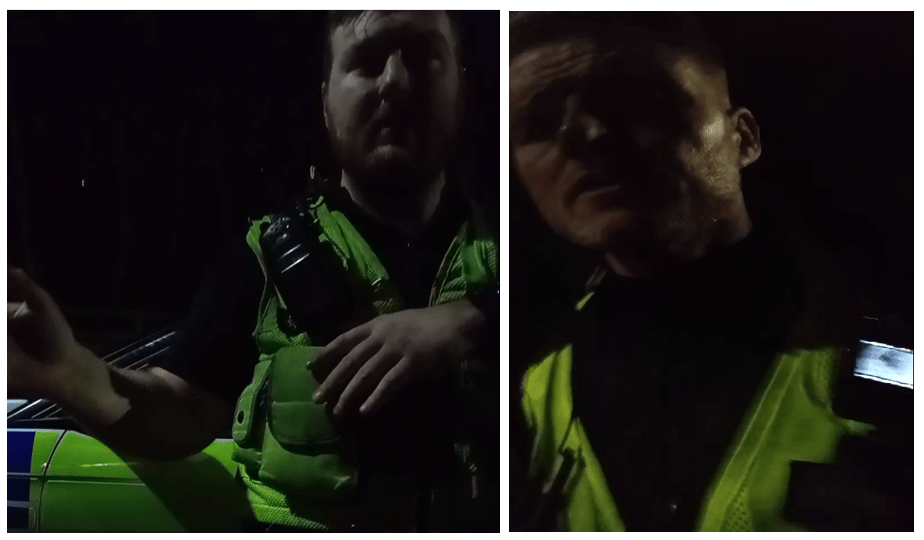
On 27th January 2024, I was stopped on Herries Road in Sheffield by two South Yorkshire Police (SYP) officers who wanted to know my name. I started filming the encounter and they then got out of the car. They demanded my name again. I asked if I was suspected of committing a crime but they both refused to answer this simple question, meaning that I was not. They then stated that not giving them my name is suspicious and proceeded to be aggressive and intimidate me, and when I got afraid and told them to step back, they both grabbed my arms. The officer on the left grabbed my hand with my phone, which stopped recording, and the one on the right grabbed my right arm forcing it back until it caused severe pain, and at which point I gave them my name. I believe these meet the definition of torture.
I was of course not the person I was looking for and they only did this because they thought I was acting suspiciously when in fact I was just existing as someone who is autistic. They then lied to deflect their misconducts, and said the person they were looking for had a machete in an attempt to appeal to my emotions. They never searched my bag for a weapon. I reported the incident as a crime of torture but no criminal investigation has ever been carried out and their sergeant lied as well and again said the person they were looking for had a machete. SYP has never disclosed to me the body cam or other records relating to these events, and the name of both of the officers has also never been disclosed. The complaint in relation to these events was of course rejected completely in a standard letter where they got my name wrong.
I believe this incident gave me PTSD, and I thus turned my NIGYSOB (Now I’ve Got You, You Son of a Bitch) strategy and the full attention of GLITTER RESIST to SYP. A high risk strategy (as the later pictures of my injuries at the hands of SYP including on one occasion a black eye show), that I hope has succeeded in proving the level of corruption that exists in the British police, and of course the level of human rights violations that SYP and other police forces are happy to inflict on autistic people. As part of my activism in relation to this and other events I sent communications to the police that went right up to line in terms of a malicious communications, later resulting in a wrongful arrest and malicious prosecution, which will be the subject of a later blog.
I have recently attempted to bring legal proceedings against SYP in relation to these events but The Judiciary (and I believe also the Attorney General’s Office) have attempted to covertly deny me justice by abusing the administrative powers of the Court by putting the Claim in limbo to avoid the adverse publicity associated with a politically explosive Claim. I have had to file a Judicial Review at the High Court to make sure this Claim gets heard. The value of the Claim is estimated to be worth up to £90k.
In my Claim I allege that SYP has violated the following common law and statutory torts. Namely:
common law assault and battery, false imprisonment, trespass to goods, and misfeasance in public office.
§15 and §29 Equality Act 2010 (EqA).
Articles 3, 5, 8 and 14 European Convention on Human Rights (ECHR) as incorporated in Human Rights Act 1998 (HRA).
Medicine makes philosophical and epistemological assumptions about nonlinear systems that are only always true for linear systems. In this blog, this collection of assumptions are referred to as the Classical Scientific Method and includes that diseases are always caused by a direct identifiable malfunction and that classical scientific and linear methods are always valid to investigate all phenomena. These assumptions are not always true for nonlinear systems (e.g. Bertalannfy, 1968), and medicine otherwise fails to fully recognise that these systems are qualitatively different to linear systems, and particularly that nonlinear systems may be counterintuitive. These fail patients by oversimplifying the complexities of human biologies. The first step is to define a linear system and a nonlinear system, and to state their qualitative philosophical and epistemological characteristic and differences.
A linear system is defined as a system that complies with the superposition principle, namely the properties of additivity and homogeneity, and thus the variables are governed by linear equations, and the input directly proportionate to the output. This generally means that systems that produce regular predictable patterns (like an analogue clock) are linear, whilst systems that are chaotic (erratic with less predictable behaviours like the weather) are not. For linear systems, understanding their component parts means (intuitively) understanding the whole, a view called Reductionism (Descartes, 1637), and forms part of the Classical Scientific Method. Reductionism means that system failures are always caused by component failures. This definition of linear systems for real-world systems, and particularly biological systems, is not always helpful because all real-world systems are nonlinear. Even if systems appear to or act linearly normally, real-world systems are always nonlinear because of real-world physical, biochemical, and mathematical constraints, e.g. up- and downregulation of morphine receptors (i.e. MOR) may be assumed as linear ordinarily, but if morphine is prescribed (a MOR agonist) then receptors cannot downregulate indefinitely thus leading to a discontinuity, which is nonlinear. The characteristics of a linear system are thus that failures can only occur from component failures, system interactions can be easily understood, systems can always be easily combined, systems are always deterministic, and systems are always intuitive.
In contrast, a nonlinear system is defined as one that does not always comply with the superposition principle, which means that the variables are governed by at least one nonlinear equation and the input is thus not directly proportionate to the output, e.g. the morphine receptor example earlier and likely explaining morphine’s physical dependency due to slower pathways attempting to restore homeostasis. The characteristics of a linear system are therefore that component failures are not needed for system failures, system interactions can be difficult to predict, systems cannot necessarily be easily or always combined, systems may not be deterministic, and systems can be counterintuitive. The study of nonlinear systems in motion is referred to as nonlinear dynamics. A comparison between the philosophical characteristics of a linear system compared to a nonlinear system is presented in Table 1 below. These twin concepts of linear and nonlinear systems are considered for medicine in the next paragraphs to identify flaws in philosophical thinking.
Table 1: Linear System vs Nonlinear System
Linear System
Nonlinear System
Direct malfunction for system failures e.g. a pathogen or injury.
Direct malfunction for system failures not necessary e.g. emergent behaviours from feedback loops.
System interactions can be easily understood e.g. drug and/or comorbidities interact simply.
System interactions difficult to predict e.g. drug and/or comorbidities interactions complex.
Systems can always be combined meaningfully e.g. combining patient results statistically for studies or meta-analysis is valid.
Systems cannot always or easily be combined e.g. combining patients statistically in studies or in meta-analysis may not always be easy or valid.
Systems are deterministic e.g. variations between identical experiments are from participant differences.
Systems may not be deterministic e.g. variations between identical experiments may be due to real-world nonlinearities not participants.
Systems are intuitive e.g. improving symptoms improves pathology.
Systems may be counterintuitive e.g. improving symptoms may worsen the underlying pathology.
Medicine began to become much more scientific from the 17th Century onwards with the discipline recognisable as a science from the early 19th Century (Tweel 2010). In the 1980s, attempts were being made to unite medical research, training and clinical practice with what was later to be termed Evidence-Based Medicine (EBM). EBM (Sackett, 2000) is concerned with “the conscientious, explicit and judicious use of current best evidence in making decisions about the care of individual patients” (Sackett, 1996, p71) with due regards to the specifics of the clinical case, and the values and wishes of the patient. This paradigm is now the dominant form of medicine practiced in the West.
EBM requires consideration of the certainty of evidence, taking account of all factors, but particularly bias; thus (like other scientific disciplines) considers deductive experiments as having the highest certainty with double-blinded randomised clinical trials having the most. This is principally because these methods more clearly demonstrate causation over correlation (ecological validity notwithstanding), and because blinding and randomisation reduces bias. These trials are principally used to determine efficacy of treatments. Proponents of EBM believe that truth can only be found in these randomised trials (Sackett, 1996).
Figure 1 – Hierarchy of Evidence Pyramid taken from Murad (2016)
On that basis, EBM includes a hierarchy of evidence relating levels of certainty to research methods (Murad, 2016), with systematic reviews and meta-analysis of high certainty Randomised Controlled Trials (RCTs) at the top, followed by RCTs with definitive results, and then everything else from observational to qualitative studies coming afterwards. Systematic reviews consider all the evidence on a medical research question and may include meta-analysis, whereby the results of similar studies are statistically combined. Proponents of EBM also believe that these secondary research methods are “one of the greatest achievements of evidence-based medicine” (Masic, 2015, p219). However, this hierarchy of evidence only includes basic research at the bottom and this research often does not even appear in lists or figures (e.g. Murad, 2016 – shown as Figure 1 above).
Basic research includes bench research, modelling, and other theoretical research. As this research is at the bottom then it is considered to have the least certainty and thus least value with clinicians and other medical researchers, with such research often denigrated by scientists, funding agencies, and the general public (e.g. La Caze, 2011). This affects funding, research priorities, and the ability to publish in mainstream journals. This is despite basic research being key to the advancement of medical research, and particularly for diseases with nonlinear emergent mechanisms. EBM therefore prioritises RCTs, sidelining basic research (e.g. bench or computational studies such as in systems biology) that is essential for studying nonlinear diseases because of their need to be modelled prior to human empirical study. So although EBM works for simple linear cases (e.g. vaccines), its approach fails patients where biological complexity is paramount.
These classical methods used by medicine are similar to those carried out on the other sciences, in that on the basis of assumptions that systems can be considered philosophically as linear, and therefore the superposition principle can be assumed to apply, measurements on those with a disease and those without are taken, which for deductive research is used to test hypotheses. RCTs’ include the primary outcome(s), which are principally related to the efficacy of diagnostics or treatments, and secondary outcome(s), which are principally related to reported side effects and harms. If the potential harms are unknown then this latter part of the study is inductive, i.e. a concurrent observational study. This means that RCTs are normally part deductive and part inductive, despite being considered as having high certainty in the hierarchy. Other confounders are controlled as per other sciences to ensure the relationships detected between variables are due to the effect studied and not some unrelated cause. However, there is generally no consideration of nonlinear confounders, which may lead to inconsistent results between studies.
Medicine adapts the scientific method principally by collecting data from multiple participants during research to attempt to average out differences caused by variability amongst patients, effectively carrying out multiple studies at the same time and averaging the results. For biomarker research as an example, there is an assumed relationship between the biological failure, the biomarker, and the signs and symptoms of the disease, e.g. high fasting blood glucose is usually indicative of Type 2 diabetes. In considering whether systems are linear or nonlinear then it is these biological relationships that matter, which is related to the relationships investigated in studies, though often indirectly. For these studies to be valid then these all require Classical Scientific Method assumptions, that is the relationships must be able to be assumed to be linear philosophically. The reasons for this are because biomarkers may not be deterministic, fluctuating seemingly erratically, or fluctuating deterministically but periodically. These mean that research carried out on one day may draw one conclusion, whilst on another draw the opposite conclusion, and that these are real-world nonlinear effects not merely due to variations in participants and chance. These also mean that classical statistical methods may average away these nonlinear biological phenomena, that is order may be disguised as randomness (Lorenz, 1963).
In these circumstances, biomarkers from participants cannot be statistically combined in studies or in meta-analyses without careful study design or further analysis and/or modelling. For example, common diseases like Type II diabetes or epilepsy for which linear assumptions are unlikely to apply, are still principally studied as linear failures (e.g. faulty genes), ignoring complex biological dynamical interactions and potential emergent failures; phenomena that is difficult (if not impossible) to study using the Classical Scientific Method. There is thus no consideration of emergent failure modes (in the engineering sense) and no consideration as to whether the patient otherwise must be considered philosophically as a nonlinear system. No hypotheses for these or any other similar diseases have considered these points (e.g. Cui, 2023). These issues likely apply to many other quantitative medical studies.
Medicine is therefore assuming Reductionism and using the Classical Scientific Method, and thus practicing a limited and out of date form of the scientific method, which by definition assumes patients philosophically and epistemologically are linear systems. These implicit assumptions have never been stated in any study (e.g. Meyer, 2006) and are not always true. This means that medicine may be failing to understand many common diseases, failing to demonstrate the validity of diagnostics on all patients, and failing to fully confirm the efficacy and safety of treatments, because it’s failing to understand the assumptions and limitations of its own methods. Worse, medicine is deprioritising basic research including modelling that is essential for understanding nonlinear systems. These philosophical flaws drive systemic failures, necessitating reform of medical research and clinical practice to protect and meet the needs of all. Unlike medicine, other sciences like engineering have addressed these philosophical and epistemological flaws and these are discussed in the next blog.
References:
von Bertalanffy L. (1968). General system theory: foundations, development, applications. New York: George Braziller.
Descartes R. (1637). Discourse on method. Translated by Cress DA (1998). 4th ed. Indianapolis: Hackett.
Masic I, Miokovic M, Muhamedagic B. (2008). Evidence based medicine – new approaches and challenges. ActaInformMed. 16(4):219-225. https://doi.org/10.5455/aim.2008.16.219-225
Meyer JH, Ginovart N, Boovariwala A, et al. (2006). Elevated monoamine oxidase A levels in the brain: an explanation for the monoamine imbalance of major depression. Arch Gen Psychiatry. 63(11):1209-1216. https://doi.org/10.1001/archpsyc.63.11.1209
Sackett DL, Rosenberg WM, Gray JA, Haynes RB, Richardson WS. (1996). Evidence based medicine: what it is and what it isn’t. BMJ. 312(7023):71-72. https://doi.org/10.1136/bmj.312.7023.71
Sackett DL, Straus SE, Richardson WS, Rosenberg W, Haynes RB. (2000). Evidence-based medicine: how to practice and teach EBM. Edinburgh: Churchill Livingstone.
van den Tweel JG, Taylor CR. (2010). A brief history of pathology: preface to a forthcoming series that highlights milestones in the evolution of pathology as a discipline. Virchows Arch. 457(1):3-10. https://doi.org/10.1007/s00428-010-0934-4
I am writing this blog having completed my report entitled “Nonlinear Systems Framework for Medical Research: Why Linear Thinking Fails Patients”, which is a technical report supporting a soon to be written policy report related to the same. Both reports are intending to be submitted to the UK Parliament Health and Social Care Committee and otherwise distributed. The technical report identifies that medicine is using a limited and out of date form of the scientific method and this is the reason why medicine cannot explain ME/CFS and a host of other common diseases. A detailed and novel explanation for epilepsy is provided in the report and from this an outline explanation for ME/CFS is given; ME/CFS being proposed as similar to epilepsy except confined to the noradrenaline system only. These are all summarised in this blog.
Also in this blog, cures for ME/CFS – including cures that worked for me – are proposed based on these explanations. I am sure those with ME/CFS will be reading this with some scepticism but I had ME/CFS since 2011 and now I do not. I can of course also explain why people may go into remission and then become unwell again because – and as you will see – recovery is a two-step process. Those who go into remission may complete the first step but fail to complete the second meaning they are far too easily susceptible to becoming unwell again.
So basically medicine is doing science wrong and their mistake relates to a lack of appreciation of nonlinear systems. This is the same mistake that nuclear safety engineering made historically and was the reason why the nuclear accident at Three Mile Island occurred (the worst nuclear accident in North America). This accident was a type of emergent failure mode, i.e. there was no direct failure rather the accident arose out of normal deviations in plant interacting adversely to cause an accident. The concept of ‘emergent failure modes’ is well-established in engineering but does not exist in medicine, which (wrongly) assumes all diseases arise out of some direct biological malfunction. A hypothetical example of an emergent failure mode is provided in the Johnny and Susie example below as illustration.
EXAMPLE BOX 1
Emergent Failure Mode 1
Johnny and Susie go for a drive in freezing conditions to buy some sweets. Johnny travels at below the speed limit but hits black ice and starts to spin. He tries to correct repeatedly but keeps making the situation worse. The car spins off the road and hits a tree. Thankfully both Johnny and Susie are unhurt, if a little shaken. A police investigation finds nothing wrong with the car and nothing wrong with Johnny, either physically or psychologically. Cold does not cause accidents otherwise everyone would have an accident when they drove in the cold. The police therefore accepted the accident was not Johnny’s fault.
Example Box 1 provides an example in the form of a person driving a car when ice is present. The accident occurred because Johnny interacted with his car, which interacted with the environment dynamically and adversely. The accident is a type of control system or feedback loop instability and occurred because of real-world limitations in responses and response times of Johnny and his car due to real-world physical constraints. There was no direct or identifiable failure that caused the accident, rather it emerged from the system, and is an example of an emergent failure mode occurring on a control system.
The mechanism for ME/CFS is therefore proposed to arise from an emergent failure mode in noradrenaline neurons in the form of two gene-protein control systems oscillating about each other as self-reinforcing oscillations. These oscillations are a type of control system instability and are well-understood and recognised in engineering but do not exist as pathologies in medicine. These systems oscillating cause havoc on neurobiological and other systems within the body. The constant abnormal motion of these systems combined with circadian rhythms is proposed to cause the neurological symptoms such as malaise, brain fog, neurological pain, and autonomic dysfunctions.
The body symptoms of ME/CFS are proposed to be caused by the oscillations on noradrenaline neurons causing oscillations on the body via an enzyme called Dopamine-β-Hydroxylase (DbH). This enzyme synthesises noradrenaline and the oscillations are proposed to cause an acquired DbH deficiency. DbH deficiency (hereditary) causes symptoms such as orthostatic intolerance, exercise intolerance, POTS, inflammation, asthma, and gastrointestinal dysfunctions. These are of course all potential symptoms of ME/CFS.
The noradrenaline system oscillates for various technical reasons but principally because noradrenaline neuron autoreceptor signalling has downregulated too far. Autoreceptors on neurons are analogous to the brakes on a car and prevent the system from overreacting. With autoreceptor signalling too low then the system can too easily become overwhelmed leading to the “triggering” of PEM (and later worsening of symptoms). Unfortunately signalling takes a very long time to recover and this is the reason why people might go into remission and then become unwell again because all they have done is stop the oscillations not recovered autoreceptor signalling.
The proposed cure for ME/CFS is therefore to stop the oscillations and then allow or encourage autoreceptor signalling to upregulate to normal.
Medicine assumes that diseases are always caused by some identifiable biological malfunction, i.e. system failures are always caused by component failures. Despite any protestations to the contrary, this is an assertion of Cartesian Reductionism[1], namely that any system can be divided into its component parts and the sum of those parts thus explains the whole. Further, methods that medicine prioritises and/or considers epistemologically valid to investigate diseases, also assume Cartesian Reductionism. These mean that medicine is practicing a limited form of the scientific method, which by definition requires systems to be assumed philosophically and epistemologically to be linear; medicine therefore assumes philosophically and epistemologically that patients are linear systems in all circumstances. Linear systems in this context being ones to which the superposition principle applies[2],[3], whilst nonlinear systems are those that do not.
This implicit assumption has never been stated in any study and is not always true; patients in a substantial minority of cases must be considered philosophically and epistemologically as nonlinear systems[4]. This philosophical and epistemological mistake was identified and corrected in engineering decades ago, largely following Three Mile Island. This was the worst nuclear accident in North America and forced engineers to identify and fix their discipline’s philosophical and epistemological problems[5].
Of principle relevance to medicine philosophically is that nonlinear systems may have emergent failures for which there are no identifiable biological malfunctions, rather system failures may emerge from components interacting adversely and dynamically. An example of an emergent failure mode is provided in the first Johnny and Susie example below.
Of secondary relevance is that nonlinear systems can be counterintuitive, which means that what someone thinks is the right thing to do is in fact the opposite of the right thing, that is if the system is assumed to be a linear but is in fact nonlinear, then attempts to correct failures in the system can result in making the problem worse.
Of principle relevance epistemologically is that nonlinear systems may not be deterministic and/or may be oscillating abnormally as emergent failure modes and self-reinforcing pathological dynamical steady-states. These mean that when investigating such systems using linear methods, then results obtained may appear random but are in fact ordered nonlinearly, meaning that statistics cannot always be easily applied to these results or at all. The second Johnny and Susie example below illustrates how statistics can mislead when used on nonlinear systems, whilst the third Johnny and Susie example below provides an example of an emergent failure mode in the form of a self-reinforcing pathological dynamical steady-state discussed above. (Note that the transition from linear to oscillatory behaviour in the third example is usually referred to as a dynamical phase transition, analogous in hydrodynamics to the transition from laminar to turbulent flow.)
Failure to assert in studies that the patient can be assumed philosophically and epistemologically to be a linear system has rendered all quantitative medical studies as scientifically invalid, and where the assumption is not true, rendered studies both invalid and wrong. Multiple other obvious ordinary mistakes have also been identified.
As the differences between autistic people and neurotypicals are due to the former having higher neuronal densities[6] than the latter, as higher neuronal density results in qualitative or nonlinear differences in responses to stimuli both external and internal, normal or pathological, and as medicine has failed to account for these qualitative or nonlinear differences because patients are wrongly assumed philosophically and epistemologically to be linear systems; medical knowledge for diagnostics and treatments is consequently dangerously wrong for autistic people, leading to our harms and deaths. Nonlinear differences between groups of people were of course the root cause of the thalidomide defects (the between groups being men and pregnant women in this case), and it’s disappointing that the wider lessons of this scandal were not learnt. The fourth and final Johnny and Susie example below shows how network behaviour is nonlinear pursuant to Network Theory.
The philosophical, epistemological, and other mistakes that directly affect autistic people include:
Failure to recognise that patients cannot always be assumed philosophically and epistemologically to be a linear system and thus consequent failure to assert in studies that this assumption is valid or to amend operationalisations when not.
Failure to recognise the existence of emergent failure modes, which are unique to nonlinear systems. Unlike every other similar scientific discipline like engineering, there is no concept of emergent failure modes or emergent pathologies in medicine, only linear pathologies.
Failure to recognise that nonlinear systems can be counterintuitive.
Failure to account for nonlinear confounders or even recognise their existence.
Failure to recognise that nonlinear systems may not be deterministic and/or may be oscillating periodically (occurring in cycles) or chaotically (occurring in episodes) as emergent failure modes, and thus that ordinary scientific and statistical methods as only used in medicine may give meaningless results.
Failure to recognise that increased neuronal density in autistic people is the reason for our differences in cognition and behaviours, pursuant to Information Theory and Network Theory.
Failure to recognise that these differences are qualitative or nonlinear compared to neurotypicals and that thus medical knowledge is dangerously wrong for autistic people. This includes diagnostics and treatments, particularly medications’ side effects which may be atypical or dangerously worse.
Failure to recognise that consequently there are unique pathophysiologies for autistic people.
Failure to recognise that drugs’ effects may be nonlinear and that these effects may increase not decrease over time. This is more likely to be true for autistic people and can be fatal.
Failure to recognise that side effects may be nonlinear and thus may be somewhat unpredictable with new side effects appearing and existing ones worsening over periods of time. This is more likely to be true for autistic people and can be fatal.
Failure to recognise that the liver enzyme CYP2D6[7] is also present in the brain in most people where it deactivates dopamine. Autistic people are more likely to be high or ultra-high metabolisers leading to dangerously nonlinear effects from drugs that affect this enzyme.
Failure to recognise that because of this most antidepressants are little more than modern day cocaine as almost all inhibit CYP2D6, with associated effects on most people. These effects will be worse on autistic people.
Failure to recognise that most antipsychotics induce CYP2D6 thus in most people such drugs would be dysphoric, and with some painfully so. The latter would be more likely autistic.
Failure to recognise that the effects on CYP2D6 may cause akathisia in some people, and these people are more likely to be autistic.
Failure to recognise that abruptly stopping most antidepressants may cause catatonia or neuroleptic malignant syndrome (which can be fatal) on some people, and these people are more likely to be autistic.
Failure to recognise that antipsychotics that induce CYP2D6 may cause catatonia or neuroleptic malignant syndrome on some people, and these people are more likely to be autistic.
Similar failures for a host of non-psychiatric drugs that inhibit or induce CYP2D6.
Failure to recognise that normal and abnormal blood chemistry levels and vitals are not the same for autistic people because of nonlinear differences compared to neurotypicals pursuant to Network Theory, and because autistic people have on average larger brains with consequent greater metabolic and other related needs.
Failure to recognise the existence of post-partem ME/CFS, an illness autistic women are more likely to suffer from.
Failure to recognise that even mild kidney damage has the potential to harm and kill autistic people because our blood chemistry needs to be controlled more precisely for neurological reasons pursuant to Network Theory. No medication that may harm the kidneys states that such should be avoided by autistic people and/or only taken under medical supervision where kidneys can then be closely monitored.
Failure to recognise that fortifying foods with calcium may kill autistic people who have only mild kidney damage, because increases in blood calcium may cause an autistic brain to overexcite leading to seizures, heart attacks, strokes, or death.
Failure to recognise a similar problem for calcium containing supplements or medications with no warning that autistic people should avoid these or only take them under medical supervision.
Failure to recognise that triage as practiced by medicine is dangerous for autistic people because of potentially fatal rapid neurological transients including seizures that are more likely to occur on autistic people, leading to inappropriate prioritisation and consequent autistic harms and deaths.
Failure to recognise nutrition advice that resistant starches are healthy has doomed autistic people to pain and suffering because such starches are not very tolerable by us. Medicine is aware that some people cannot tolerate resistant starches, but those people are mostly autistic.
Failure to recognise that statutory requirements for medical treatment authorisation are woefully inadequate because they fail to account for nonlinear treatment effects and side effects, fail to account for interactions with nonlinear diseases like ME/CFS and epilepsy, fail to account for other nonlinear differences like autism, fail to consider whether the treatment in improving symptoms worsens the underlying pathology, and fails to attempt to explain the biological reason for most side effects, consequently failing to make (obvious) predictions of potentially harmful effects on large groups of people, including autistic people.
Failure to recognise that in using statistics to attempt to provide treatments that are safe and effective on most people, medicine is harming or killing or allowing to die those at genetic extremes (which includes autistic people). This is a form of eugenics and could eventually lead to humanities extinction.
The four problem areas that I have identified leading to autistic harms and deaths by medicine include the following:
Autistic people have different pathophysiologies to diseases that may affect the brain, either directly or indirectly, leading to different signs, symptoms, and risks.
Medication that is known or suspected to affect the brain, either as treatment or side effect, may have an atypical and/or exaggerated effect or side effect on autistic people.
Vitals and blood chemistry that are considered normal and abnormal are different for autistic people. These include (non-exhaustive) minimum and normal BP, body temperature, O2, CO2, blood glucose, sodium, potassium, calcium, magnesium, bicarbonates, and blood pH.
Signs and symptoms for diseases otherwise are different for autistic because of differences in sensory processing.
A report has thus been filed at the International Criminal Court alleging that the NHS is committing crimes against humanity against autistic people. This report can be considered medicine’s Three Mile Island moment.
[1]“Discourse on the Method of Rightly Conducting One’s Reason and of Seeking Truth in the Sciences” by René Descartes (1637).
[2] “Penguin Dictionary of Physics” by J Cullerne (2009).
[3] “Penguin Dictionary of Mathematics” by D Nelson (2008).
[4] Medicine uses the phrase ‘nonlinear system’ to refer to any system with nonlinear behaviour (which is not the definition in engineering) but then makes philosophical and epistemological assumptions about the system that only always apply to linear systems.
[6]“Autism spectrum disorders pathogenesis: Toward a comprehensive model based on neuroanatomic and neurodevelopment considerations” by A Beopoulos et al in Frontiers in Neuroscience(2022).
[7]“The neuroprotective enzyme CYP2D6 increases in the brain with age and is lower in Parkinson’s disease patients” by A Mann et al in Neurobiology of Aging (2012).
I am restarting my blog about my experiences in society of being routinely discriminated against because I’m autistic. I stopped blogging at the end of 2018 because of the events with the DWP (who provide social security in the UK) and the NHS had broken me to such an extent that it’s essentially taken until now to recover. I am by all accounts not exactly the same as other autistics, I for example held a job as a nuclear safety engineer for 14 years albeit often bullied early on in my career and then later blacklisted at many organisations because of my stance on safety. I am probably not exactly the same because of my high intelligence and other neurological advantages that I have lucked out on. I do not have ADHD or any other condition other than autism, I have never had a serious mental illness or epilepsy, and I’ve never had meltdowns only shutdowns. But I have tended to suffer from so-called Medically Unexplained Symptoms, starting with IBS, MCS and finally ME/CFS which is when my problems really began.
I started to get symptoms of ME/CFS in 2011 and I carried on working becoming more and more sick until I had to give up work completely. I was only diagnosed as autistic in April 2019 but I attempted to get a diagnosis in 2006, and what I have discovered is that because ME/CFS affects your cognition and because social communication for me is much harder then I essentially became more autistic. I find that if I am tired, hungry, overly stressed or in this case sick, then I get treated much worse than I do when I’m not. I used to think that I’m marmite, that is people either loved me or hated me, but now I think when sick I get treated badly and people hate me and when I’m well people love me and treat me better than others.
I have no idea exactly what is going on but I can only assume it’s something to do with my non-verbal communication. I have looked at videos of me when I was very sick and at videos of me when I am much better and I can tell the difference, the first to me I perceive myself as vulnerable, cute and needing to be looked after, whilst the other I perceive myself as charismatic, attractive and confident. This means how people treat me is of no reflection on me, I perceive myself as needing support, but rather a damning reflection of others and our society. A society that values status, unearned respect and deference to authority, over caring for the less fortunate. So as distressing as being mistreated by society is, I like that society often shows me their true colours – I like that I get to see a part of society that most people do not get to see. I feel like I’m in Henry IV Part 1 and I am being shown how badly large sections of society are being treated mostly simply because they are poor. I of course did not used to be poor; I am only poor because I got sick, and I am not going to just put up with allistic bullshit based on fragile egos and prejudice.
On 12th October 2018, I had my health assessment with the DWP to keep my sickness benefits. The health assessor Ms Eileen Bell, a nurse, then discriminated against me because I am autistic leading to my benefits being stopped. I then experienced extreme distress leading me to break down, to order drugs of the internet to kill myself which did not arrive and to demonstrate my distress on Twitter which was noticed by others.
On 1st January 2019 I attended Manchester Royal Infirmary due to this distress having been very superficially self-harming. The nurse Ms Katrina Ray then looked and spoke to me with disgust and contempt and when I tried to get her name, she called security. I insisted on talking to the charge nurse Nigel Gillen who then proceeded to try and provoke me into being aggressive, then when that did not work, lied about me assaulting him, and when that did not have the desired effect on me, he had me ejected from the premises and then him and Ms Ray lied about me being aggressive in my medical records anyway, demonstrating that was his strategy from the start. I complained and predictably the hospital colluded with their staff and rejected my complaint, gaslit and discriminated against me further. After these events I was so distressed that I had to be rescued by my estranged parents who then made me homeless a year later.
I then moved to Sheffield on 12th November 2019 and attempted to recover from all these distressing events and of course my upstairs neighbour then proceeded to demonstrate anti-social behaviours, particularly extreme noise nuisance. I did not want to pick a fight with my neighbour whilst I was very sick so I just put up with it until I could stand it no more and made a very mild complaint about him and was told that he had already been spoken to.
On 11th August 2021, my neighbour believing I had made numerous complaints about him, assaulted me by charging at me down the steps. The police were called and of course naturally being autistic, I the victim was arrested. The perpetrator basically reversed the events which when I pointed out to the police could never be true, the investigation against me was dropped. I then successfully sued the neighbour and attempted to sue the police for discrimination. The police then persuaded the neighbour to change his witness statement in line with information I had provided to them as part of our civil legal proceedings, and I was consequently charged.
At the time of the arrest, the police failed to ensure that I had understood my rights, because the arrest triggered sensory overload so I was unable to understand anything anyone said thus the arrest was not lawful. This of course means when combined with the fabricated evidence that the prosecution has no chance of success and thus is malicious. The police therefore colluded with the witnesses against someone who is autistic – this is going to be a common theme and I will be writing more about this including from a social psychological perspective. We are it seems much less further away from fascisim, genocide, civil war or anarchy then I otherwise realised if the state throughout and those who work for the state are prepared to abuse their power repeatedly. I intend to fight this abuse by all and any means possible.
In the police station because prior to the arrest I had gone for a long walk and failed to bring enough water, I had sunstroke and dehydration, and unbeknownst to me I had medication-induced acute kidney injury, meaning that at the time I was experiencing life-threatening symptoms. In the cell, I was denied the ability to understand what the custody sergeant was saying on the intercom because he spoke too fast and thus denied adequate toilet paper and being forced to use my clothes instead, denied adequate water. This could have been fatal when combine with my kidney damage. I was also denied access to a solicitor to discuss this mistreatment. I eventually passed out in the cell from this acute kidney injury and when I awoke I had asked for medical assistance but was provided paracetamol only.
The first hearing at the Magistrates Court was on 8th September 2021 and the trial is on 31st January 2022, and I am looking forward to the events because it has allowed me to really let rip in my witness statement, and afterwards I will of course have further grounds to sue the police. There’s a lot more going on but perhaps that’s enough for now.
From the symptoms listed in my medical records historically from 2003 to 2011 multiple MUS are reported including, IBS, MCS, atypical face pain and later tinnitus. Such symptoms are strongly indicative of the potential for ME/CFS and indeed (though it’s poorly recorded in my medical records) I repeatedly attended GP’s for fatigue and malaise prior to becoming more seriously unwell in 2011. All doctors ignored all this compelling evidence for a MUS-related illness, instead attempting to fit (often made-up) symptoms to a mental illness diagnosis.
From 2011 onwards there are similar MUS symptoms reported including sensitivity to many drugs, and later concentration worsening symptoms. Such experiences are very familiar to ME/CFS suffers and indeed worsening of symptoms following concentration (mental exertion) is listed as a key symptom of ME/CFS. None of these are symptoms of Bipolar Affective Disorder, and there is no evidence that clinicians considered ME/CFS or anything other than mental illness. There is no mention in the medical records of my stated malaise or of me feeling unwell (like how you feel like inside with the flu was my description), nor of the fatigue or brain fog or palpitations, all of which again would have again pointed towards ME/CFS and not Bipolar Affective Disorder.
Further, I reported when I triggered the symptoms feeling inside like I was on the motorway and the foot had been taken off the accelerator which I now know was orthostatic intolerance, and there was no exploration of such description with the assumption that I was referring to mood. It appears that medicine had decided I was mentally ill and looked for symptoms that would fit this collectively decided diagnosis, irrespective of the facts or the iatrogenic harm that would be done to me. Far be it for me, a mere patient, to know their own body and to know their own mind but they essentially ignored everything I was saying imposing an unasked for mental illness diagnosis (because I know what nonsense psychiatry is). Repeating the violations that psychiatry often inflicted on other gay men in the past and mirroring similar violations that occurred in my childhood.
I now know everything went wrong after a consultation in May 2012 where the doctor wrote that I said I was suffering from “’attacks’ of mania”. I have never heard of such an expression and when reading this entry in my medical record I was astonished that a single wrong entry from years ago could cause me such problems later on. She even uses quotes for ‘attacks’ to imply she’s quoting me. Unfortunately what she states is simply untrue. I never said “’attacks’ of mania” and nor would I ever have said such a thing, as it would ruin my career. At the time I was working earning £100k/year and was to continue working for another two years. It’s completely ludicrous to believe that I would say that knowing that the security vetting agency could later read my medical records. Indeed because of this factually untrue statement a doctor later wrote to this vetting agency stating I reported suffering from “’attacks’ of mania” contributing to my career being finished. I can state categorically that her statement is factually untrue because unfortunately for this doctor my partner was in this consultation. He can confirm that I have never used the phrase “’attacks’ of mania” and nor did such a description describe my illness. He also said I never mentioned irritability, another word I was reported as saying that’s been added in for good measure.
Later in 2014, another doctor in another city reports me saying the exact same phrase I did not say two years ago. It appears if you mention drug use then doctor’s assumes you are mentally ill; pure prejudice and ignorance. This doctor then adds depression for good measure, reinforcing the mentally ill symptoms I never said I had. It’s like a game of Chinese Whispers with doctors, each hurriedly adding and compounding the initial mistake, ignorantly (and incompetently) ruining the lives of their patients.
From then on and particularly after I am forced on to benefits, everything I do and say is interpreted as though it’s mental illness related, from the amount I say to how quickly I speak to what I talk about (and the inability for ignorant doctors to understand it). I mentioned insomnia, dysphoria and akathisia and there is no evidence any doctor considered that these were caused by my HIV medications, despite specifically requesting what drugs I am taking. This failing is particularly disgraceful.
I at no point complained to doctors about depression or mania, yet because I have an illness they are either unfamiliar with or dislike and because I am autistic so my body language is atypical (causing them to misread me at best and dislike me at worst) they categorise me as mentally ill. There is no objective evidence that I have or have ever had mania or depression or otherwise, and indeed the neuropsychiatrist confirms she made no diagnosis (whilst prescribing medication that would trigger my ME – a fact she even states earlier in her report!). It might very well be that my mood goes up and down but it’s no more or less than before I was unwell, and it has nothing to do with why I am disabled, which if you actually look at the symptoms1 is because I have ME/CFS.
1 I have had many more: gasteroperesis, sleep apnea, stomach ulcers, migraines, muscle pain, orthostatic intolerance, POTS, sore throats/difficulty swallowing.
My work capability assessment did not go well. For the interview, I had brought a fit note from July which diagnosed me with mood disturbances and a letter stating that I had been diagnosed with bipolar affective disorder from October 2017, which I had obtained from a GDPR1 request. Neither my GP (Dr Haq) nor the psychiatrist (Dr Mathurine) had the courage, courtesy or decency to state this to my face leaving me to find out in July by reading my documents. I do not have bipolar affective disorder.
I could not understand why a neuropsychiatrist and a psychiatrist both thought I had an elevated mood and it appears it’s because I am autistic. The main reason originally I wanted to look at my medical records is because I thought that hypochondriac had been written there and that would explain why my attempts to access healthcare nearly always failed. But it appears they are treating me badly for an even worse reason. I wrote to my GP’s practice detailing all of this, explaining that the misdiagnosis is because I have ME/CFS, a much maligned illness by medicine, and because I am autistic as doctor’s often misread our mental states. Writing this letter set off my ME meaning that there was no possibility of me being well enough in time to start university this September, putting my life on hold because of medicine for yet another year. I deregistered from my GP in disgust. The only positive to come out of it is my near certainty that I would be diagnosed with autism and to finally have an explanation for medicine’s poor treatment of me.
With these documents in hand, I had felt quite confident before the assessment because I thought I would score 15 points again because although I was much improved since last time, I still have essentially the same issues. However, the assessor I got seemed much more hostile than the previous one and I began to feel anxious. I tried to explain the problems I have been having with the NHS but she kept referring to self-diagnosis and how these hold little weight. I began to regret my policy of “just-in-time” anxiety as in this case it appears to have been “just-too-late”.
I said I do not have bipolar affective disorder yet she asked if I had taken antipsychotics and I felt the combined force of the state’s boot on my face. I said that they would have set off my ME/CFS and that my intolerance and sensitivity to drugs is written throughout my medical record. She asked why I had not been tested for ME/CFS and got a proper diagnosis (showing she knows nothing about ME/CFS) and I told her that I have been traumatised by the NHS and in any case I have tried repeatedly but I get nowhere as I am now in the mental box so they no longer listen to me (not that they listened to me before).
Despite me telling her about PEM2 and the issues I have with concentration, she asked why I had not gone to university in September. I kept stressing the mental fatigue, brain fog, headpains and concentration issues yet she did not seem to be listening. She asked what time I got up and I said 3 and she asked if I went back to sleep and it took me two days to realise she thought I meant 3am not 3pm. Then at about 45 minutes into the consultation she started asking about how I got to the assessment centre and I told her I walked and it had taken about 1 hour 45 minutes. I then started to internally panic triggering emotional and sensory overload causing dissociation because as I have no physical disabilities then I would fail my WCA forcing me into destitution and homelessness as I am unable to work. I would not survive on the streets being autistic and having ME/CFS so it would essentially mean death. I am writing this because I still fear that to be the case.
I told her in the interview that I was dissociating, I had this intense urge to escape, but she said she was nearly finished and carried on. The only word I can use to describe how I felt is violation. I feel violated at having been forced to continue in an intensely vulnerable state whilst I was dissociating and would describe it as like being tortured. I felt like I couldn’t control my facial expressions and that it was stuck in a grimace. I had to read her lips so I could understand what she was saying as my ability to process auditory information vanished. I was not capacitous.
When I left the interview I was very distraught. I remember tweeting that it had not gone very well and I felt intensely anxious and fearful. I thought that was it I am going to have to kill myself and indeed when I got home I started writing a will. As I walked home past Picadilly Station and parallel to the Ashton Canal, I passed the Urban Village Medical Practice, one of those new city modern practices with a large NHS sign on the side. Looking at that sign with those three blue letters on white background I felt nothing but disgust and betrayal.
This blog relates to a consultation I had with a GP Dr Anwar Haq who practices at Lime Square Medical Centre in Openshaw Manchester on 17th July 2018 which I recorded and obtained the notes which you can listen to and read here.
It’s been a strange experience reviewing my medical notes and discovering the effects of the medical gaze first-hand, particularly when I get to view myself as both object and subject as I have my memories of the consultation, the recording I took, and now my medical notes.
The notes demonstrate the power of the physician to construct and distort the reality of the consultation. The physician’s perspective reigns supreme whilst the patient’s is relegated to mere footnotes or even erased entirely.
The superiority of the physician (and hence inferiority of the patient) must be reinforced.
The physician does not fail to ask about symptoms rather it is the patient who fails to explain them.
Patients merely SELF-diagnose and SELF-medicate and any such attempts are to be frowned upon and discouraged, preferably with a sarcastic remark about googling one’s own symptoms. One cannot have the patient diagnosing and treating themselves.
Only doctors diagnose.
Only doctors prescribe.
In the new religion, only doctors can identify and forgive sin, prescribing the punishments to appease the god of health.
It is the patient who “expresses different strange ideas” not the physician who lacks knowledge or competence or understanding of these ideas.
BUT “strange ideas” are not clinical opinion, they are not even honest opinion.
Honest opinion would be that the physician does not understand the ideas, or that they disagree with them. Or indeed that the ideas are nonsense or twaddle.
“Strange ideas” crosses the rubicon from honest opinion to objective fact. Ideas are either objectively strange or they are not.
Just because the physician finds them strange does not make them so.
Just because the physician means to express opinion does not mean they cannot, drunk on their own power and arrogance, float into the choppy waters of objective fact.
In the past this misrepresentation of the consultation, of the facts and of reality would go unnoticed and unchallenged.
But it’s 2018.
GDPR (as enacted by DPA 2018) is in force. Patients can EASILY check their medical records for free at anytime. Mobile phones can secretly record and are owned by nearly everyone. Tiny little spy audio and video recording devices are easily and cheaply available to make covert recordings.
This deceit and conceit is no longer tenable. The physician can no longer position themselves as the authority, as superiority. They can no longer construct reality for their own purposes and benefit.
In the early 17th century Galileo championed heliocentrism, the (now well-accepted) belief that the earth orbits the sun. He was persecuted by the church for heresy and spent the rest of his life under house arrest and forced to recant.
For the last 18 months, the church of medicine – the new religion – has been persecuting me.
Persecuting me for medicine’s abject failures over the last 100 years in understanding many illnesses from ME/CFS and other MUS to psychiatric illnesses.
Persecuting me for having the audacity to have ME/CFS an illness that does not fit, and therefore cannot be understood by, medicine’s flawed epistemology.
Persecuting me for being autistic and daring to think differently and in a way allistics struggle to understand.
Persecuting me because medicine has its head so far stuck up its own arse it cannot see the simplicity of the problem nor its solutions.
Medicine might think the sun shines out of its arse but being that far stuck inside Plato’s Cave (or up their own arses) they cannot see it. They cannot understand and will NEVER be able to solve these problems because of it.
I am an autodidact polymath, a Chartered Physicist, a psychologist and safety systems engineer yet because I am not a medical doctor and my ideas are novel (though only to medicine I might add), I have “bizarre beliefs” and “strange ideas”. I have been said about me, when I’m just being myself and talking about these ideas, that I have an “elevated mood”, I have “hypomania”, that I have “mania” and that I have “mood disturbances” (not said to my face I might add). Subsequently being misdiagnosed as having bipolar affective disorder. All because I have the audacity to be autistic, to be hyper-interested in neuropsychiatry and to question medical orthodoxy. If medicine had their way I’d be locked up, forcibly medicated and told to recant my “bizarre”, “unusual” and “strange” beliefs, truth be damned.
Science, culture and technology may change but there remains one enduring feature of society that of the powerful (medicine) trying to suppress the powerless to maintain their hegemony, to maintain their fragile egos. Even if it means harming everyone else in the process. First do no harm indeed.
You can see my theory below for yourself. A theory for which I received a scholarship I might add. Disagree or do not understand but do not refer to it as “bizarre” or “strange” because you’re embarrassed about not knowing how to think.
One might recognise it today as a risk-benefit analysis; the benefit to the patient must demonstrably outweigh the risks. A wise, just and noble principle.
A principle doctors and health professionals throughout the ages were, are and will be proud to abide by and uphold. The Prime Directive of medicine if you will.
In my last blog I discussed the adverse reaction I had to a medication. Despite such adverse reactions being common in autists, the risks from this medication were not considered. In my blog before last, I discussed how I have been misdiagnosed as having bipolar affective disorder because I am autistic, despite withdrawing consent for the assessment before it even commenced. This misdiagnosis has caused me significant distress (and financial harm) effectively denying me access to many medical services because I no longer trust them. When I go to the doctor with a problem they have not once been able to diagnose and assist unless I know exactly what the problem is and what I want.
Autists are more likely to be harmed by medical interventions because medicine does not consider the risks specific to us, we are more likely to be misdiagnosed putting us off seeking future help; and even when we do seek help doctors are more likely to disbelieve our often atypical symptoms and overlook our illnesses. One might think that was quite enough medical adversity but actually there is more and arguable the worst, as it can make accessing health care for me extraordinarily difficult. That is the repeated microaggressions we receive from many allistics but seemingly and bizarrely particularly from allistic health professionals who you would think would know better.
Microaggression is a term that was coined by Chester Pierce (a psychiatrist at Harvard) in 1970, to describe the regular insults and dismissals African-Americans received from others. It is a term used for commonplace verbal, behavioural, or environmental indignities, whether intentional or unintentional, that communicate hostile, derogatory, or negative prejudicial slights and insults toward a marginalised group.
Every interaction I have with a medical professional is negative in some minor or major way. This is very common for autists. Whether it’s a brief look of hostility that flickers across someone’s face when they first meet you, a disbelief in what you are saying or patronising you and treating you as though you are stupid. This is the daily life of autists whose masks aren’t and can never be perfect both within and without a medical setting. Even at the milder end where I say something slightly wrong or in the wrong tone of voice, that slightly worried look flickers across their face. Or when I get asked an open-ended question and their impatience turns to exasperation and annoyance when I cannot answer the question immediately. Include the intersection of gender, race and queerness and the effects are multiplied.
These daily microaggressions exhaust and upset you, and it is particularly hurtful when it comes from the people who are literally paid to care for you. It makes me feel:
I am not worthy of care
I am not worthy of love
I have no worth
I am worthless
First, do no harm seemingly doesn’t apply to autists. We’re the wrong kind of patient. It is actually worse than that as due to this misunderstanding some health (so-called) professionals provide poorer quality care on purpose or even act in spite. I cannot prove this but I am fairly certain my misdiagnosis arose out of actions by my old GP and the last psychiatrist I saw – both of which I complained about. The former in person and the latter immediately afterwards (for negligence and for prohibiting recording the consultation respectively). I now record all contact covertly. First, do no harm indeed.
I feel I now have post traumatic stress if not PTSD due to how I’ve been treated by medicine in the last 18 months if not all my life because I am autistic. Autists are dying much younger than allistics and the above illustrates some of my problems which others must also be facing, and our early deaths must surely be related. This is a disgrace.





 Glitter Resist